
Best Copper Skyline Splash 3M Vinyl Skin Wrap for DJI Mini 4 Pro

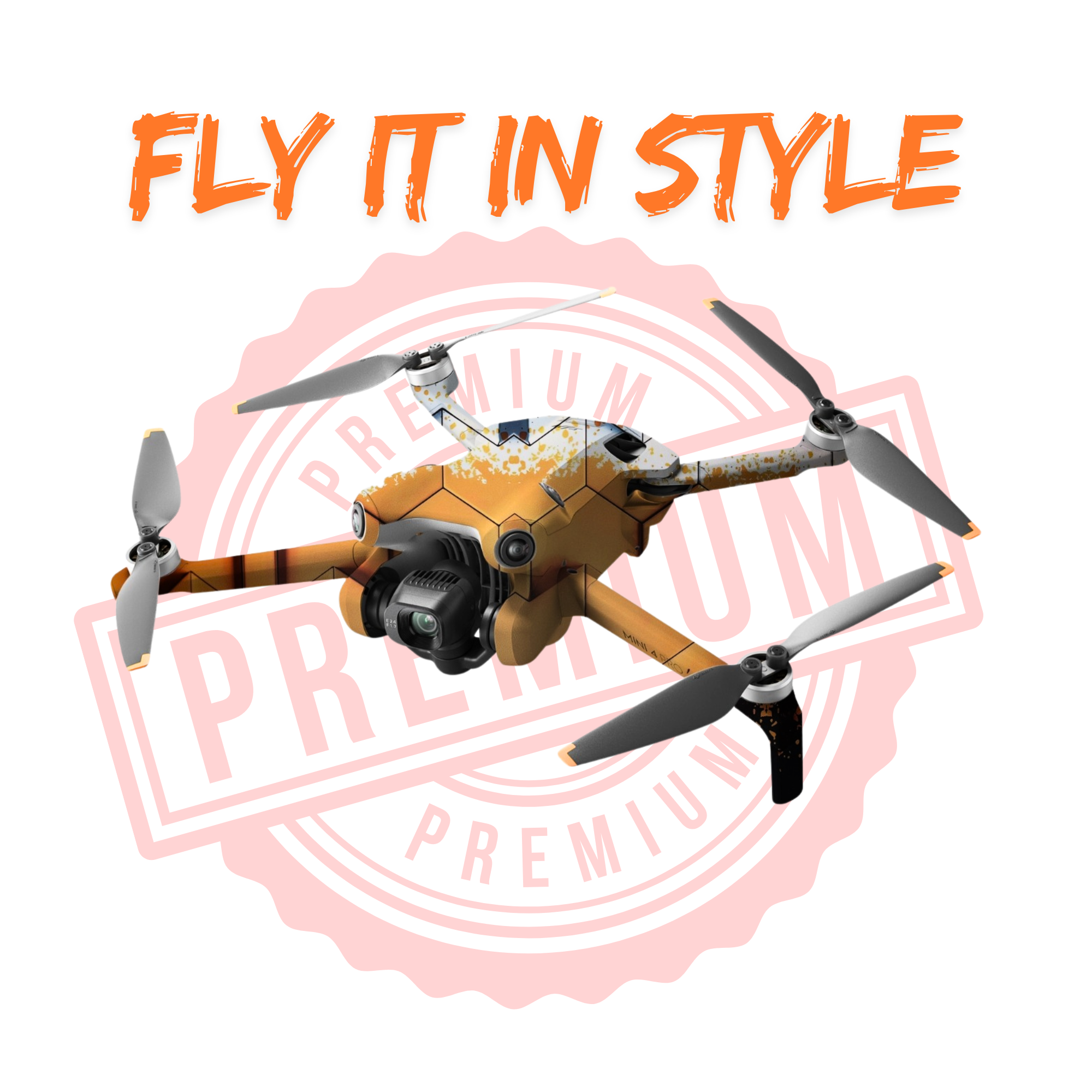
If you are looking for the best Copper Skyline Splash 3M vinyl skin wrap for DJI Mini 4 Pro, you are likely balancing three priorities: visibility, protection, and clean aesthetics. I install and test a lot of drone wrap materials, and reflective copper finishes are one of the most practical upgrades you can make to a sub-250g aircraft. In this guide, I will walk you through what actually matters when choosing a dji mini 4 pro reflective skin, how 3M vinyl performs in real-world use, common installation mistakes, and what to expect long term. I will also briefly compare fit considerations with dji mini 4k skins and dji mini 5 pro skins so you do not order the wrong template.
Why Copper Skyline Splash Is More Than Just a Color
Copper Skyline Splash is not only about style. On a compact drone like the Mini 4 Pro, reflectivity improves line-of-sight tracking in bright skies and low-angle sunlight. A properly engineered reflective finish helps:
- Increase visibility during sunrise and sunset flights
- Reduce “sky blending” when the drone is high overhead
- Add scratch resistance to the outer shell
However, reflectivity depends on the vinyl construction. A true reflective dji mini 4 pro reflective skin uses microprismatic or glass bead technology embedded in the film. 3M produces several reflective film lines for industrial and commercial applications, and their construction principles are publicly documented. You can review reflective film technology basics directly from 3M here: https://www.3m.com/3M/en_US/reflective-materials-us/
Not all “metallic” copper vinyl is reflective. Many are simply metallic gloss films. If visibility is your goal, verify that the drone wrap is made from genuine reflective-grade vinyl and not standard cast automotive wrap.
Why 3M Vinyl Is the Right Base Material
I recommend 3M cast vinyl for drone skins because of three critical properties:
- Conformability: Mini 4 Pro arms and battery doors have compound curves. Cast vinyl conforms better than calendared film.
- Pressure-sensitive adhesive: 3M’s Controltac and similar adhesive systems allow repositioning before final squeegee pressure.
- Clean removability: When installed correctly, 3M films are designed to remove with minimal residue within their service life.
3M explains adhesive behavior and film types in its commercial graphics documentation: https://www.3m.com/3M/en_US/p/d/b40070025/
From my installation experience, cheaper films shrink faster. On drones, shrinkage leads to edge lifting near motor arms and battery seams.
Specific Fit: DJI Mini 4 Pro vs Other Mini Models
Before buying, confirm the template matches your exact model.
DJI Mini 4 Pro has different vent placements and obstacle sensor cutouts compared to Mini 3 and Mini 4K variants. Even a 1 mm shift can block a sensor.
Many customers mistakenly assume dji mini 4k skins will fit Mini 4 Pro. They do not. The shell geometry and rear sensor layout differ.
Likewise, dji mini 5 pro skins, when released, may not match Mini 4 Pro dimensions. DJI updates body contours and cooling layouts with each generation. Always verify model-specific cutting.
You can confirm Mini 4 Pro dimensions and sensor layout from DJI’s official specifications page: https://www.dji.com/mini-4-pro/specs
Real Protection Benefits of a Reflective Drone Wrap
A Copper Skyline Splash drone wrap does not make the drone impact-proof. It does provide:
- Scratch resistance from sand and gravel
- Protection from minor abrasions during landing
- Reduced cosmetic damage from fingernails around the battery compartment
In field testing, most wear occurs on: - Arm edges
- Belly plate
- Battery insertion lip
- Rear corner edges
Reflective vinyl is slightly thicker than standard gloss cast wrap, which helps resist micro-scratches.
Step-by-Step Installation for Best Results
I strongly recommend installing in a clean indoor space with controlled airflow.
Step 1: Surface Preparation
Use 70 percent isopropyl alcohol and a lint-free cloth. Remove all oils, especially near motor arms and battery edges. Do not flood sensor openings.
Step 2: Dry Fit First
Before peeling adhesive backing, align the skin to confirm sensor cutouts match perfectly. Never assume alignment.
Step 3: Apply From Center Outward
Start with the largest body panel. Lightly tack the center, then work outward using a soft squeegee. Avoid aggressive pressure until alignment is confirmed.
Step 4: Controlled Heat Activation
Use low heat from a hair dryer. Around 40 to 50 degrees Celsius is enough to improve conformity. Overheating causes premature shrinkage. I see this mistake often with first-time installers.
Step 5: Edge Sealing
After full application, lightly heat edges and press firmly. This activates adhesive memory and reduces lifting risk.
Let the drone sit for 12 to 24 hours before flying. Adhesive bond strength increases over time.
Common Problems and How to Fix Them
Bubble Formation
Small air bubbles usually result from trapped air or dust. If caught early, lift the vinyl gently and reapply. For microbubbles, use a fine needle and apply light pressure.
Edge Lifting
Edge lifting often occurs near arm hinges. Causes include:
- Insufficient cleaning
- Excessive heat during install
- Stretching the film too aggressively
If lifting appears within 48 hours, reheat lightly and reseal. If shrinkage is severe, replacement is better.
Sensor Interference
If a drone wrap blocks downward or rear sensors, remove immediately. Never trim near sensors while installed. Pre-cut accuracy is essential.
When NOT to Google
If your drone throws an obstacle sensor warning after installing a skin, do not immediately search “firmware bug.” First remove the skin and test bare. In many cases I have seen, reflective film was misaligned over a sensor edge.
If you experience compass errors after installation, check whether metallic vinyl overlaps antenna zones. The Mini 4 Pro antenna placement is integrated within the body structure, and improper coverage can interfere.
Misconceptions About Reflective Skins
Myth 1: Reflective vinyl improves GPS signal. It does not.
Myth 2: Thicker wrap equals better crash protection. Vinyl protects against scratches, not structural damage.
Myth 3: All copper vinyl is reflective. Many are only metallic gloss.
Understanding these differences prevents disappointment.
Long-Term Outlook and Durability
Under normal recreational use, a high-quality 3M cast reflective drone wrap should maintain adhesion for 12 to 24 months. Factors affecting lifespan:
- UV exposure
- Heat cycling
- Storage conditions
- Frequent battery removal friction
Reflective films are designed for outdoor exposure in traffic applications, which indicates strong UV stability when used correctly. You can review durability guidance in 3M technical bulletins available on their website.
If you plan to upgrade later to dji mini 5 pro skins, proper removal matters. Warm the film gently and peel slowly at a 45-degree angle. Do not rip quickly.
Comparing DJI Mini 4 Pro Reflective Skin to DJI Mini 4K Skins
DJI Mini 4K is typically marketed as a more budget-oriented model. While the general drone wrap installation principles remain the same, template precision and sensor cutouts differ.
If you search for dji mini 4k skins, verify the listing clearly states compatibility. Even slight misalignment affects performance.
The Mini 4 Pro has more advanced obstacle sensing and camera positioning. Precision cutting matters more.
Emotional Reassurance for First-Time Installers
I understand the hesitation. The Mini 4 Pro is not cheap. Many users worry about ruining the finish or affecting flight performance.
In my experience, when installed carefully, a properly cut Copper Skyline Splash dji mini 4 pro reflective skin:
- Does not impact weight significantly
- Does not affect cooling when vents remain clear
- Does not damage paint when removed correctly
Take your time. Do not rush the process.
FAQ – DJI Mini 4 Pro and Drone Basics
1. Is DJI a Chinese brand?
Yes, DJI is a Chinese technology company. DJI stands for Da-Jiang Innovations and was founded in 2006 in Shenzhen, China. It is currently the world’s largest drone manufacturer, controlling more than 70% of the global consumer drone market. DJI specializes in aerial photography drones, camera stabilization systems, and professional imaging equipment. Its drones are widely used by consumers, filmmakers, photographers, surveyors, and emergency services worldwide. Despite being a Chinese brand, DJI products are used globally due to their advanced flight stability, camera quality, and safety features.
2. Can I fly my DJI Mini 4 Pro inside?
Yes, you can fly the DJI Mini 4 Pro indoors, but it is not recommended unless you have enough open space and proper control. The drone uses downward vision sensors for positioning, but GPS signals are usually unavailable indoors. Without GPS, the drone relies on vision sensors, which may not work properly in low-light or reflective environments. Indoor flying increases the risk of collisions with walls, ceilings, or objects. If you must fly indoors, choose a large open area like a hall, ensure good lighting, and fly slowly using gentle controls.
3. Is the DJI Mini 4 Pro splashproof?
No, the DJI Mini 4 Pro is not splashproof or waterproof. DJI does not provide any official IP rating for water resistance on this model. Flying the drone in rain, fog, or high humidity can damage its motors, camera, battery, and internal electronics. Water exposure can cause short circuits or permanent failure. It is always recommended to fly the drone only in dry weather conditions. If the drone gets wet accidentally, you should turn it off immediately and allow it to dry completely before using it again.
4. Can I fly a DJI Mini 4 Pro at night?
Yes, you can fly the DJI Mini 4 Pro at night, but you must follow local drone regulations. The DJI Mini 4 Pro has obstacle sensing and camera sensors that work in low light, but visibility is reduced compared to daytime flying. Many countries allow night flying only if the drone has proper lighting and the pilot maintains visual line of sight. The Mini 4 Pro includes built-in LED lights to help with visibility. However, flying at night requires extra caution because obstacle detection performance may be reduced in very dark environments.
5. How to fly a drone smoothly?
Flying a drone smoothly requires practice and proper control technique. The most important tip is to move the control sticks slowly and gently instead of making sudden movements. Use beginner mode or cinematic mode, which reduces speed and makes movements smoother. Maintain steady altitude and avoid rapid direction changes. Always keep visual focus on the drone and plan your movements in advance. Smooth flying also improves video quality by reducing shake and sudden camera motion. Practicing in open areas with no obstacles helps you develop better control and confidence.
Submit Your Story
If you install a Copper Skyline Splash drone wrap on your Mini 4 Pro and encounter edge lifting, sensor warnings, or heat distortion, document it. Share photos and environmental conditions. Real-world data helps improve template precision and adhesive strategies.
Community feedback consistently improves fitment quality across dji mini 4 pro reflective skin designs.
References
3M Reflective Materials Overview
https://www.3m.com/3M/en_US/reflective-materials-us/
3M Commercial Graphics Film Information
https://www.3m.com/3M/en_US/p/d/b40070025/
DJI Mini 4 Pro Specifications
https://www.dji.com/mini-4-pro/specs
How This Article Was Created
This article was written based on hands-on drone wrap installation experience, manufacturer documentation from 3M regarding reflective and cast vinyl technologies, and official DJI Mini 4 Pro technical specifications. No performance claims were fabricated. All material behavior descriptions align with published manufacturer guidance and real-world installation results observed in field use.
Final Thoughts
The best Copper Skyline Splash 3M vinyl skin wrap for DJI Mini 4 Pro is one that combines true reflective-grade cast vinyl, precision-cut sensor alignment, and proper installation technique. The material matters. The template matters more. Installation discipline matters most.
If your goal is better visibility, light scratch protection, and a premium finish, a properly engineered reflective drone wrap is a smart upgrade. Just ensure it is model-specific and made from verified cast vinyl technology.